


 Send Inquiry
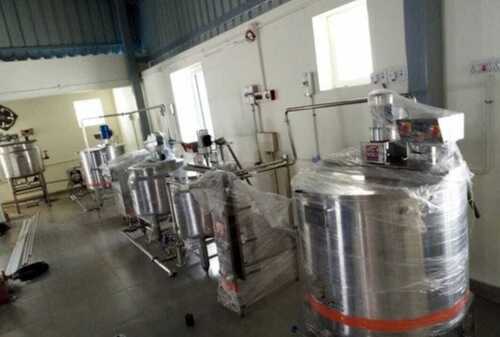
CREAM LOTION MANUFACTURING PLANT
Price 360000 INR/ Piece
MOQ : 1 Piece
CREAM LOTION MANUFACTURING PLANT Specification
- Machine Type
- Vacuum Mixer Plant
- Noise Level
- < 80 dB
- Speed Mode
- Variable Speed (Frequency drive controlled)
- Function Type
- Mixing, Emulsifying, Heating, Cooling
- Frequency
- 50/60 Hz
- Phase
- Three Phase
- Power Source
- Electric
- Features
- Vacuum Deaeration, CIP & SIP Ready, Touch Screen Controls
- Automation Grade
- Automatic
- Feeding System
- Manual and Vacuum Feeding
- Heating Method
- Electrical/Steam Heating
- Operating Temperature
- Room temperature to 100C
- Product Type
- Cream & Lotion Manufacturing Plant
- General Use
- Mixing, Emulsifying, and Manufacturing of Creams & Lotions
- Material
- Stainless Steel
- Type
- Vacuum Emulsifying Mixer
- Capacity
- 50L to 1000L (Customizable)
- Weight (kg)
- 1000-3500 kg depending on model
- Product Shape
- Rectangular with vertical cylindrical vessels
- Computerized
- Yes
- Automatic
- Yes
- Control System
- PLC Based Control Panel
- Installation Type
- Containerized or Fixed Installation
- Voltage
- 380-415 V
- Power
- 10-30 kW
- Dimension (L*W*H)
- Customized as per capacity (approx. 4000 x 2000 x 2500 mm)
- Raw Material
- Stainless Steel SUS304/316L
- Feature
- Uniform Mixing, Emulsifying, Homogenizing and Heating/Cooling capability
- Color
- Silver (Stainless Steel Finish)
- Pressure Rating
- Atmospheric to -0.09 MPa (Vacuum enabled)
- Safety Features
- Overload, Overheat & Interlock Safety Controls
- GMP Compliance
- Yes, suitable for pharmaceutical & cosmetic use
- Level Indicator
- Provided on main vessel
- Mixing Speed
- 0-65 RPM (Adjustable)
- Operating Staff Requirement
- 1-2 persons
- Documentation Supplied
- IQ/OQ/DQ/Installation Manuals
- Product Discharge Method
- Bottom Discharge Pump/Valve
- Vacuum Pump Capacity
- As per vessel size for efficient deaeration
- Batch Homogeneity
- >99%
- Lid Type
- Motorized/Manual Lifting with View Glass & LED light
- Accessory Vessels
- Oil Phase, Water Phase, Main Mixer
- Water Jacket Thickness
- 3-5 mm (as per design)
- Outlet Valve Type
- Sanitary Design, Butterfly or Ball Valve
- Cleaning System
- CIP (Clean-In-Place) compatibility
- Homogenizer Speed
- 0-3500 RPM (Adjustable)
- Application Industries
- Cosmetic, Pharmaceutical, Ayurvedic, Chemical, Food
- Agitator Type
- Anchor with scraper and paddle mixing
- Vessel Surface Finish
- Mirror Polished (Internal) / Matt Finish (External)
About CREAM LOTION MANUFACTURING PLANT
ZIGMA MACHINERY & EQUIPMENT SOLUTIONS are Manufacturer, Supplier, Exporter of Various Fruits & Vegetable Pulp Processing Plants, Fruits & Vegetables Jam/Jelly Processing Plants, Fruits & Vegetables Juice Processing Plants,Advanced Mixing and Homogenization
The plant is engineered with variable speed homogenizers and mixers, providing consistent emulsification and uniform mixing. The anchor agitator with scraper and paddle ensures thorough blending while homogenizer speeds up to 3500 RPM allow for fine product texture, free of agglomerates and air pockets. Computerized PLC controls automate process parameters for batch consistency.
Comprehensive Safety and Quality Compliance
Equipped with overload, overheat, and interlock controls, the plant guarantees operator safety and product integrity. All contact surfaces are GMP compliant, employing SUS304/316L stainless steel and mirror finishing, ideal for pharmaceutical and cosmetic standards. CIP (Clean-In-Place) preparation supports easy automated sanitization.
Flexible Capacity and Customization
Available in capacities from 50L to 1000L, the plant can be tailored for varying batch sizes and operational needs. The modular design allows for containerized or fixed installation, adaptable to production scales and plant layouts. Each system comes with comprehensive documentation and installation support, ensuring straightforward commissioning.
FAQ's of CREAM LOTION MANUFACTURING PLANT:
Q: How does the cream lotion manufacturing plant ensure uniform product mixing and batch homogeneity?
A: The plant utilizes an anchor-type agitator with scrapers and a paddle, combining with a powerful homogenizer (adjustable up to 3500 RPM) to achieve thorough and consistent mixing. These features, together with PLC-controlled process parameters, deliver batch homogeneity above 99%, eliminating dead zones and ensuring smooth, airy-free formulations.Q: What safety features are integrated into the system for operator and product protection?
A: Safety controls include overload, overheat, and interlock mechanisms, preventing equipment damage and ensuring operator safety. The vessel design is compliant with atmospheric and vacuum pressure ratings, and safety is further enhanced by touch screen controls, sanitary valves, and motorized lid operation.Q: When should CIP (Clean-In-Place) system be used during production?
A: The CIP system is recommended after each batch to maintain sanitary conditions and prevent cross-contamination. Its compatibility with automated controls enables efficient, thorough cleaning of all product-contact surfaces without disassembly, thereby supporting GMP compliance and reducing manual cleaning labor.Q: Where can these vacuum mixer plants be installed and what types of installations are available?
A: The manufacturing plant can be set up within cosmetic, pharmaceutical, ayurvedic, food, and chemical facilities, offering both containerized and fixed installation options. Its compact, customizable shape (approx. 4000 x 2000 x 2500 mm) makes it suitable for various industrial environments as required.Q: What is the process flow for producing creams and lotions in this plant?
A: Production involves sequential feeding (manual/vacuum) of ingredients into oil and water phase vessels, followed by temperature control and homogenization within the main mixer. Vacuum deaeration removes air for a smooth texture. The CIP system sanitizes the plant post-production, and product discharge is accomplished via sanitary outlet valves using bottom discharge pumps.Q: How does the plant benefit manufacturers in terms of efficiency and production quality?
A: Automated operation, precise temperature controls, vacuum deaeration, and efficient mixing yield superior emulsified products while minimizing batch variability. GMP compliance, batch scalability (50L-1000L), and automated documentation empower manufacturers to meet regulatory and market demands for both small and large-scale lotion and cream production.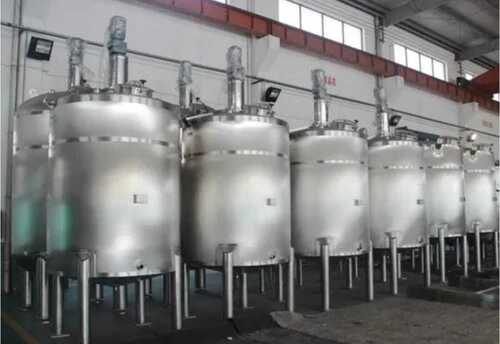
Tell us about your requirement

Price:
Quantity
Select Unit
- 50
- 100
- 200
- 250
- 500
- 1000+
Additional detail
Mobile number
Email

More Products in FOOD PROCESSING MACHINE Category
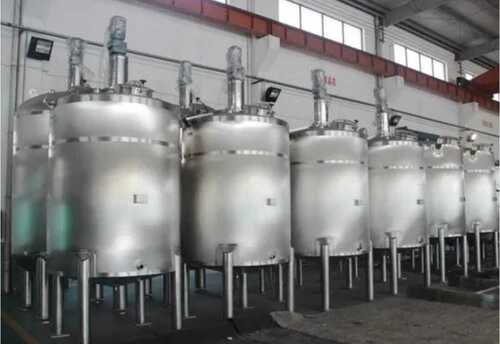
MORINGA SEED OIL PROCESSING PLANTS
Price 450000 INR / Piece
Minimum Order Quantity : 1 Inch
Product Shape : Other, Rectangular skidmounted plant
Raw Material : Other, Moringa seeds
Operating Temperature : Ambient to 60C (process controlled)
Dimension (L*W*H) : 3600 mm x 1600 mm x 2400 mm (varies by model)
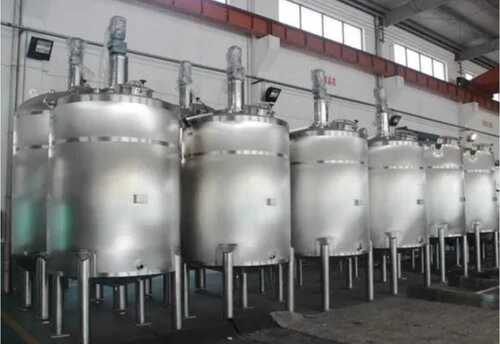
TUTTI FRUTTI MANUFACTURING MACHINERY
Price 250000 INR / Piece
Minimum Order Quantity : 1 Piece
Product Shape : Other, Rectangular / Customizable
Raw Material : Other, Fruit Slices / Fruit Pulp
Operating Temperature : Up to 120C
Dimension (L*W*H) : Customization Available
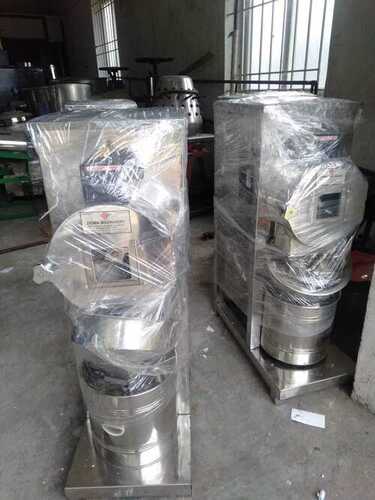
STAINLESS STEEL PULVERISER
Price 35000 INR / Piece
Minimum Order Quantity : 1 Piece
Product Shape : Other, Rectangular Cabinet with Cylindrical Hopper
Raw Material : Other, Stainless Steel
Operating Temperature : Ambient
Dimension (L*W*H) : Approx. 54 x 28 x 80 cm
TOMATO POWDER PROCESSING PLANT
Price 360000 INR / Piece
Minimum Order Quantity : 1 Piece
Product Shape : Other, Rectangular, Compact Plant Layout
Raw Material : Other, Fresh Tomato
Operating Temperature : 40 180C
Dimension (L*W*H) : Customizable, approx. 16m x 6m x 7m

ZIGMA MACHINERY & EQUIPMENT SOLUTIONS
GST : 33CGIPS5665K1ZS
GST : 33CGIPS5665K1ZS
Contact Details

- 223, Corner of GKS Avenue, Siruvani Road, Vadavalli, Near Bharathi Vidya School,Coimbatore - 641046, Tamil Nadu, India
- Phone :08071794159

- Mr. Sundar Prabu (Director)
- Mobile :08071794159
- Send Inquiry
 Send Inquiry
 Send Inquiry
 Send SMS
 Call Me Free
ZIGMA MACHINERY & EQUIPMENT SOLUTIONS
All Rights Reserved.(Terms of Use)
Developed and Managed by Infocom Network Private Limited.
Developed and Managed by Infocom Network Private Limited.

